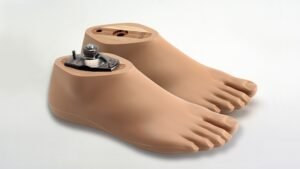


Above-knee vs below-knee prosthetic legs is an important topic for anyone researching prosthetic limb options. This practical guide explains what to consider and how to prepare for informed conversations with a qualified prosthetist.
What is the difference?
An above-knee prosthesis is used after a transfemoral amputation, where the limb difference is above the knee. A below-knee prosthesis is used after a transtibial amputation, where the person’s own knee joint remains. This distinction affects the components needed, how walking is controlled, and the rehabilitation process. Neither design is automatically the right choice for every person.
Components of a below-knee prosthetic leg
A below-knee system commonly includes a custom socket, suspension system, structural components, and a prosthetic foot. The preserved knee joint can help with control during walking. Socket comfort and suspension are especially important: a poorly fitting socket can cause discomfort and skin problems even when other components are appropriate.
Components of an above-knee prosthetic leg
An above-knee system typically includes a socket, suspension, a prosthetic knee, connecting components, and a foot. Knee units can differ in how they manage stance stability and swing. Mechanical, hydraulic, and microprocessor-controlled designs have different characteristics, maintenance needs, and costs. A prosthetist can explain which choices match a person’s goals and circumstances.
Which type is easier to walk with?
Walking demands vary with residual-limb length, muscle strength, balance, overall health, socket fit, training, and terrain. People with below-knee limb differences retain their anatomical knee, while people using above-knee devices rely on a prosthetic knee mechanism. Outcomes are individual; avoid comparing progress with another person’s timeline.
Questions to ask before choosing components
Ask how the socket will be fitted and adjusted, which suspension options are available, how the foot or knee handles your usual activities, what maintenance is required, and what is included in the total price. Also ask about follow-up appointments, warranties, and replacement parts. Component compatibility should be confirmed by a qualified prosthetist.
Explore related resources
You can browse prosthetic products, learn about prosthetic areas and components, and read our guide to prosthetic legs for sale. Product listings are informational and do not replace an individual clinical assessment.
Medical note: This article provides general education, not personalized medical advice. Prosthetic selection, fitting, and adjustments should involve qualified healthcare professionals.